Hail and welcome, hail!

Gaming. Politics. Films. Football. Society. Life.

Saturday, 28 June 2014

Lost Odyssey -- Review (Xbox 360)

Released: 2008. Developer: Mistwalker.

Final Fantasy is a gaming series that, before 2010, looked set to pass Microsoft and its gaming divisions by. The original Xbox never received an official Final Fantasy release while the Xbox 360, too, seemed destined to remain a stranger to Square Enix’s mammoth franchise. This all changed, of course, with the multi-platform release of Final Fantasy XIII in 2010. Regardless, in 2008 Microsoft were intent on having their own contender take on the might of Sony’s (former) JRPG ally in the form of Lost Odyssey. Better yet, to ensure their champion had a fighting chance, Microsoft hired the original creator of Final Fantasy itself, Hironobu Sakaguchi. With this in mind it may come as no surprise to state that Lost Odyssey is, for all intents and purposes, a Final Fantasy game in all but name.

Lost Odyssey does not pretend to be anything other than what most JPRG veterans have come to expect from the genre. The main protagonist, Kaim, has amnesia and must navigate his way through a world which combines fantasy magic and 19th century industrial advancements. The major characteristic of Kaim – and a few other playable characters – is that he is immortal and cannot ‘die’ during combat. It is, undoubtedly, rather cool to see Kaim get back up after a few turns during combat, shrugging off the damage, and quipping along the lines of ‘sorry about that.’ Of course, if all party members (five maximum) are knocked unconscious during combat then it is still game over, regardless of whether Kaim is on the field of battle or not. The turn-based combat is very reminiscent of previous Final Fantasy titles. Physical and magical abilities are selected from menus, while items and consumables are also usable during battle. The animations and artistic style to some of the moves is impressive, as are the designs and variations in the monsters you will encounter. Summed up best, Lost Odyssey’s combat is functional. Physical attacks give the player a chance to line-up circle prompts on the screen for more effective damage, but it is hardly enough to keep combat truly engaging. As with many JRPGs, grinding the same enemies for experience (XP) or loot dilutes the enjoyment to be had with an otherwise traditional take on JRPG combat. Boss encounters can keep things tactical and refreshing, while the wall/defence positioning of characters adds a small layer of depth. In all, there is probably enough here to keep most JRPG fans fairly happy for the game’s 60+ hour playtime, but those who have grown tired of JRPG traits will find little to adore here.

Kaim, the cliched generic JRPG amnesiac protagonist.

Kaim’s travels allow him to encounter and recruit a decent array of followers to prevent the journey becoming too much of a chore. That said, Lost Odyssey does not delve too far into narrative complexity or character development; what you see is what you get. The antagonist is a typical evil genius able to manipulate those in power to meet his own ends, all the while emoting dastardly laughs without a hint of irony. Kaim himself is a drab figure. Intended as the silent brooding type, he says little and conveys not an awful lot beyond anger or frustration. Some of the other characters do add some colour to the journey though, particularly Kaim’s grandchildren, Cooke and Mack, who clearly defy the age restrictions attached to fighting 20-foot monsters. Again, this is all functional JRPG stuff, but Lost Odyssey ultimately ends up shooting itself in the foot. During a mid-game cut scene the game tries far too hard to convey despair, expecting the player to share in the on-screen tragedy with floods of tears. Unfortunately, the game falls way short of this expectation particularly when paired with Kaim’s complete inability to look anything other than constipated. Meanwhile, the game also allows the player to locate and read excerpts from Kaim’s memories which are scattered throughout the game world. These short-stories are written by someone external to the development team and are of a much different tone and vision to the game’s own story. Where Lost Odyssey never really attempts – or completely fails – to convey depth or proper emotion, the short-stories based on Kaim’s memories are beautifully written and are accompanied by tracks from Nobuo Uematsu’s (another Final Fantasy veteran) superb soundtrack. These heartfelt and emotional written stories are a complete contrast with the generic narrative of the core game and illustrate how things could have been so much better. As it is, Lost Odyssey achieves very little when compared to some of the more memorable JRPG narratives out there.

Lost Odyssey is a by-the-numbers JRPG and there is no getting away from that. What made it stand-out in 2008, however, was its technical and visual fidelity. This was the first real JRPG using the Unreal Engine and Microsoft clearly wanted players to identify the game based on its horsepower. In other words, Lost Odyssey was one of the first major Xbox 360 RPGs to showcase the console’s capabilities. In screenshots the game looks fantastic but in practice Lost Odyssey does not achieve the technical feats many had hoped for. It is clear that the developers, Mistwalker, struggled to mould the graphics engine to their liking. Textures sometimes display incorrectly while the framerate struggles to remain consistent at times. The lack of v-sync is also a shame and sullies the excellent artistic flair on display through frequent screen-tearing. On the other hand, the level of graphical detail on characters, monsters, and the environment is impressive – it is when the game is in motion that things can go awry.

Players explore the varied environments in Lost Odyssey as they would in other JRPGs: talking to static NPCs; searching for lootable cupboards in town houses; climbing the occasional ladder; buying and selling to vendors; running from point A to point B; locating save-points, and so on. Battles will occur randomly as Kaim explores the world. Monsters are rarely visible on the environment itself and so battles appear out of nowhere. Exploration can be interesting in patches but most of the environments are rigidly linear with the occasional minor puzzle to solve (like pushing a mine-cart, for example). The game manages to offer compelling and enjoyable landscapes, such as the lush and beautiful Ipsilon Mountains, to the mundane, repetitive and utterly boring, such as the Great Ancient Ruins with its obtuse and frustrating levitating elevator system. Most locations are well-designed but some are clearly intended as padding content. Uematsu’s soundtrack, however, truly elevates the ambience and enjoyment of exploration and proves to be one of Lost Odyssey’s finest assets.

The world of Lost Odyssey can be beautiful at times.

The word ‘functional’ frequently occurs when considering Lost Odyssey. It does absolutely nothing to further JRPGs as a genre and is often found drenched in the same annoying tendencies associated with similar games. There is grinding, invisible enemy ‘random encounters’, an amnesiac lead character, and a generic narrative. Technical issues are also apparent which damage the otherwise superb art design. On the other hand, the game has plenty of content to discover (including secrets and side-quests), a superb soundtrack, decent combat, exploration, and offers enough going for it to entice fans of the genre. Most of all, though, Lost Odyssey has clearly been designed with plenty of passion and care. The game treads too far on the traditional path at times but its core quality is rarely in doubt. The main criticism that can be aimed at Lost Odyssey, then, is its lack of innovation. The game relies too heavily on the outdated concepts of past Final Fantasy titles which other JRPGs, such as Persona 3, Persona 4 and Square Enix’s own Bravely Default, have largely evolved beyond. Having to find save-points, or grind for XP, or navigate mundane environments was already dated by 2008, so playing Lost Odyssey today highlights Mistwalker’s naivety. (At least Mistwalker can take solace in the fact that Final Fantasy XIII is also justifiably accused of not evolving.) In all, Lost Odyssey did a fairly decent job to fight Microsoft’s JRPG corner, but it is only hardcore traditionalists that can ignore the game’s reluctance to adapt. Ultimately, then, a functional and fundamentally good JRPG, but one that is firmly rooted in the past and affixed to design flaws that should no longer exist, even in 2008.                                                                                       

                                                                                                                6/10

Friday, 14 February 2014

The Elder Scrolls Online -- Beta Preview

As with most major single-player gaming franchises, the notion of The Elder Scrolls going online is not one that most in this medium would be surprised at. However, after the failures of BioWare’s Star Wars: Knights of the Old Republic, and even an effort donning The Lord of the Rings license, would it be any surprise to see The Elder Scrolls Online going free to play within a few months of its launch?

Fat Orc.

The beta seemed fairly robust during my early adventures – first impressions certainly count in MMORPGS, so it is good to see ZeniMax laying their cards on the table already. (The tones of John Cleese, heard within 5 minutes of your adventures, attests to ZeniMax’s desperation to make you immediately *want* to like their game: ‘Look! We have John Cleese! He’s funny and he’s voicing this humorous character! Isn’t this brilliant?!’) Character creation is pretty good. The options provided are, at the very most, akin to those available in Skyrim and, at the very least, an improvement over the laughable selection offered in the biggest MMORPG of them all, World of Warcraft. I was able to create a character fairly close to the one in my imagination – a fat and old Orc warrior; overweight, but experienced and strong as an ox. Perhaps this is false praise: a fat Orc is hardly on the precipice of imaginary aestheticism. Even so, the creation tools available appeared at least satisfactory compared to other contemporary MMORPGs.

As is Elder Scrolls canon, you begin in a prison. This time you’re not on Tamriel, though. Michael Gambon appears, disguised as some frail-but-powerful old prophet, and tells you, in no uncertain terms, that you need to escape this twilight landscape and return to the regions with which we are most familiar. The narrative appears fairly routine from these early impressions, though full voice-acting is appreciated, even if it is, by now, an expected feature.

Dumbledore turns up to offer advice. He's seen it all before, you know?

It is apparent, almost upon immediate gameplay, that this doesn’t feel like a Bethesda game. The movement is a bit off; the combat a bit stiff. Of course, Skyrim was never the pinnacle of fluidity and pacey movement, but The Elder Scrolls Online feels like a different beast. As a warrior-type, the controls were largely similar to Skyrim: left-click to attack, right-click to block. Variations of that basic concept exist (such as holding left-click for heavy attacks), but are expanded later with the introduction of that MMORPG staple: cooldown abilities. By the time I had earned my first cooldown I was hoping that it would add some more spark and zest to the combat. Unfortunately, that was not the case.

Even before escaping the aforementioned prison-area, the swinging of swords and maces began to grate. The weight of combat felt too light, too ‘float-y’, if you will. Sometimes I would block an attack, but the enemy would still hit me. The hit-detection is a little wonky. The cool thing is, at least, you can mix it up and try different variations of weapons and armour until you find something favourable; the game doesn't overtly restrict your play-style, though you still must pick a basic ‘class’ upon character creation.

Combat is a bit iffy.

This isn't Skyrim. You don’t leave prison and have ‘that’ moment. You know, the one where the whole expanse of Skyrim becomes clear: that you can do whatever the heck you want; go wherever the heck you want. In this game, The Elder Scrolls Online, you’re hemmed in by MMORPG laws. If you venture too far, a high-level monster will paste you into mush. If you jump on a table of assorted plates and pint-mugs, and run around like a loon, those assorted items of cutlery and mugs will remain static. If you pull out your blade and swing it at an NPC, they won't flinch. Guards won't be alerted to your terror and strive to save their city. The world doesn't respond to you; you don’t matter. Players run around with daft names, and jump about like kangaroos on heat. This isn't really what the Elder Scrolls is about.

As a game, an MMORPG game, The Elder Scrolls Online is functional. But it is unremarkable. The quests are what you would expect: go here, kill that. Sometimes it varies, but the core concept remains the same. You level up, you spend attribute points, you get new armour, etc. This would be fine had we not already endured a slew of wannabe MMORPGs of the same ilk. Aion, Rift, and The Old Republic have all tried and failed to emulate on the formula of World of Warcraft. How can they? Blizzard’s behemoth has had a decade’s head-start. Unless you improve the formula, radically reshape the concept and make it better, then you’re wasting your time. The Elder Scrolls Online is destined for the same fate as Aion, Rift, and all the others. A life of free to play mediocrity.

The game can look majestic at times, however, it lacks the technical mastery of Skyrim. In fact, it lacks technical clout in general, unfortunately.

Any signs of hope? Well, this is, after all, only a beta. Perhaps mid-to-end game is a vast improvement. The combat is, at least, semi-different than the usual World of Warcraft concept, but it’s too unpolished, too sketchy. It could be improved before release, but this beta strikes me as being fairly close to what the released product will ship like. At least there is expanse in terms of combat freedom. The visuals are serviceable, and look nice in areas. The artistic style and tone of the Elder Scrolls is present within environmental design and enemy-types, and the music has a similar riff to Jeremy Soule’s output (but that’s probably because it uses his tracks and merely adds further instruments over the top?). This isn't a graphics engine that will stand the test of time, though. Even beefed up – which wasn't a possibility in the graphical options for the beta – I cannot imagine The Elder Scrolls Online competing with Xbox One, PS4, and PC titles for long. It already has an aura of ‘last-gen’ about it.

Any MMORPG enthusiast will probably find enough to like about The Elder Scrolls Online to warrant a month or two’s play, but by and large, based on the beta, the game is disappointing. Take away the license, and all we have is another generic-MMORPG designed to siphon subscribers away from World of Warcraft. If even a BioWare-backed Star Wars game cannot effectively compete, then what chance does The Elder Scrolls Online have? Not much, I’ll wager.

Wednesday, 14 August 2013

Batman: Arkham City -- Review (PC)

Rocksteady's original Batman-led title, Arkham Asylum, came as a surprise. Decades of dreadful superhero games (Superman 64, anyone?) is enough to make even the most ardent comic-book fan cynical towards videogame iterations. With Arkham Asylum, though, we were treated with a very well presented, highly polished, and utterly playable game that somehow featured a superhero. It actually worked. In fact, Arkham Asylum must surely go down as one of best action-adventure titles of this generation, especially when factoring-in its self-contained narrative and content that can stand on its own without the inclusion of DLC or sequels. Of course, minor nods to a sequel are given, and so Arkham Asylum's success has enabled Rocksteady the opportunity to better what was already been achieved.

Arkham City opens in a more direct manner than its predecessor. Ten minutes during the intro is enough to show the basics before you're freely controlling Batman. You're also already equipped with plenty of upgraded gadgets carried over from Arkham Asylum. Rocksteady does assume, to some extent, that you're familiar with how these games work (if not, there's enough text on the info menu). Though this approach is appreciated - especially as someone who bemoans how, say, Kratos is constantly reduced to puniness at the start every God of War title - it is in stark contrast to the linear and methodical path set-out in Arkham Asylum's opening. In Arkham City you are given a huge island's worth of thugs, side-quests, and Riddler trophies to preside over; it can be quite overwhelming. The main objective is always marked and can be followed without distraction, but the optional content is sometimes worth exploring. Rocksteady clearly want to express Arkham City as a sort-of Arkham Asylum on steroids. There is more of everything: baddies, puzzles, abilities, combat, flying, sneaking, and so on. This is admirable, but the results are not necessarily an improved formula.

Potentially to its own detriment, Arkham City is massive

Arkham Asylum benefited from a semi-linear and narrative-focused pace. Whenever you fought thugs, it felt rewarding. They tended not to respawn in mass droves (if at all), and so every encounter was a gameplay privilege. Arkham City is much more generous with thugs and goons; they litter the city, and will respawn endlessly. The sense of privilege begins to diminish as you fight the same baddies for the fifteenth-billion time, more so if Batman is maxed out in all of his abilities (leveled up with XP gained from defeating said goons). New enemy types help add flavour, but constant regurgitation soon dampens that effect. This applies for both the core-modes of which the Arkham games centre around: melee combat, and stealth. In general terms, hand-to-hand combat is identical to Arkham Asylum but adds new moves and enemy types; stealth gameplay (predator mode) follows the same pattern, except with environmental hazards (proximity mines) and enemy equipment (electrical scramblers that distort Batman's Detective Vision). This is literally the same game, but with more stuff. Indeed, the extra stuff is subsequently used to a huge extent, and so dilutes the aforementioned privileged experience of gameplay. That said, the combat and stealth is still solid. It suffers from diminishing returns, no doubt, but has enough thrill, flair, and nuance to make it recommendable over any rival games.

Visually the game is also identical to Arkham Asylum. Same graphics engine. Same character models. Same awesome combat and action animations, but the same awkward and laughable facial expressions and body movement during character interactions (think a plastic Batman toy talking to a plastic Joker toy). It's still a reliable engine, though. The game looks good. No instant reload after death is, however, disappointing. I enjoy seeing Two Face laugh at my dead corpse as much as the next person, but I'd rather be playing the game again quicker.

A few additions come to an otherwise identical stealth mode from Arkham Asylum (ditto with melee combat)

Two Face does appear in Arkham City. As do around a dozen or more villains from the Batman universe. Again, this is Rocksteady throwing as much as they can into one game; instead of looking to improve fundamental design elements, they just add more stuff. Arkham Asylum benefited from having one main villain with a few on the periphery. Arkham City attempts to incorporate as many characters as possible and, as such, the narrative becomes messy and unfocused. Hugo Strange is presented as the initial overlord villain during the intro - the one man you need to stop. But then Joker turns up and wants your attention. And then another evil villain does. And then this other villain is suddenly more important than Strange. And then Strange is important again. And so on for another 10+ hours. Any excuse is used to ensure Batman encounters as many characters as possible. It is, simply, too much. Fortunately, narrative was never a key selling point for either Arkham titles, but Arkham City completely fails where its predecessor triumphed in creating a daft but nevertheless entertaining story line.

Of course, this is sounding rather downbeat and depressing on the part of Arkham City, but that reason is merely due to the brilliance of Rocksteady's earlier achievement. Make no mistake: what Arkham City offers is still much better than most other action titles out there. This is still a stylish and enjoyable game. Combat has lost it's initial oomph, but still feels weighty and satisfying. Similarly, stalking prey and planning tactics keeps you on your toes as Batman tries to remove foes efficiently without sustaining a shotgun to the cranium. The return of extra challenge maps allows one to hone their skills for the campaign, and to appreciate the depth of skill achievable for the very best players. And yes - backtracking to use upgraded equipment to nab that Riddler trophy is still as satisfying as before. Fundamentally, it's still the same as before, but it's still fun.

Extra costumes come as paid-for DLC or with the GotY edition (reviewed here). Traditionally such things would be unlocked as a reward, but these days players are expected to pay for the privilege

'More of the same is better' is not a wholly inaccurate term when it comes to gaming. As long as you can stomach the same game in terms of visuals and gameplay, with a few added features here and there, then Arkham City is absolutely fine for fans of Arkham Asylum. The issue for Rocksteady, inevitably, is that, in Arkham Asylum, they have already created something that is easily one of the best of its genre. It is a benchmark for all over superhero, action-adventure developers out there. How can such a title be improved upon on the same generation of technology? Visuals have not progressed in Arkham City. Nor has gameplay. The latter can be fine-tuned, but the combat and stealth was already so good. Without risking ruining the formula, Rocksteady chose to blow Arkham Asylum up into massive super-edition that adds new moves, abilities, enemies, puzzles, and mega villains. Arkham City can best be described as Arkham Asylum 1.5. Not quite a 'proper' sequel in terms of overall improvement, then. Indeed, the switch from narrative and linear driven gameplay towards open-world freedom dilutes the formula, but it does not taint it. Nor does, ultimately, the shambolic attempt at a narrative that incorporates every Batman villain every imagined. Arkham City is still a solid game, but its surprises and party tricks have already been done before.

                                                                                  7/10

Saturday, 13 August 2011

So, Metacritic...

Nope, this isn't the definitive break-down, mixing elements of mathematics, and particle physics, of the somewhat controversial score aggregator. That is for another day, and will require perhaps more web-space than this blog can offer. No, what I want to rant about here is something more irrelevant, but still prominent in its ability to annoy me.

So, maybe 2 or 3 months back, Metacritic began taking review scores for games played on iOS, Android and smart-phone/tablet devices and listed the highest scoring games on their site. This is, of course, Metacritic's function, so no complaints there. The problem is that the site doesn't list these games in a category intended for mobile games, but rather, thinks it's acceptable to integrate them onto the same list which 360/PS3/Wii/PC etc, appear on.

Now, to me, a game like Angry Birds isn't something I would ever consider a -- and I'm gonna say it chaps, so be ready -- "proper game". It's akin to something like, I dunno, minesweeper or something; you're playing it to kill a few minutes while you're on the train, or waiting at the doctor's. These aren't games that will engross you like a full PC or console title; they're just daft little games to play when you're bored.

This webpage makes me sad, as I'm sure it does for Team Bondi as well

I'm not saying the quality of games like Angry Birds are bad, or anything like that, and fully accept that reviews should be collected to listed. However, I don't think it's fair to put such games on a list which is populated by games made by large development teams using high-end technology and delivering large and complex gaming experiences. It's actually an insult to see something like Cut the Rope nestled above something like Shogun 2: Total War (not that this is the case, but is an example); if I were the developer of Shogun 2 I'd be mortified.

I've contacted Metacritic about resolving this annoying feature, but it's not likely they will take on-board any feedback from me alone. However, it seems so obviously flawed that I can only hope they have the sense to change it in future, and just make a separate list for iOS/Android games which is obviously best for everyone.

Another problem with this, and maybe a reason why Metacritic seems oblivious, is that many gaming journalists are becoming so casual with regards to gaming, that they themselves believe smart-phone games like Flick Kick Football are no different to playing games on consoles or PC (or even hand-helds like the 3DS or PSP, for that matter). This ties in with my feelings that gaming media is getting worse overall, since a lot of these professional writers are basing their gaming experiences from playing Cut the Rope and then being paid to review games like Frozen Synapse. There's too much wrong there for me to be happy with that, and I have to question the credibility of these journalists.

Nadal having a quick bash on Cut the Rope -- when he retires from being the best in the world at tennis, he can use this experience to land a job at Eurogamer

Of course, it's entirely possible to play and enjoy all types of games, be it on consoles or smart-phones, but when someone is actively getting paid to write about console games it's a little worrying to find out they spend most of their free-time not playing console games, but rather having the odd bash on Tiny Wings while on the train.

Maybe that's where I've been going wrong; I play too many actual games instead of Angry Birds. Maybe if I spent more time playing stuff like that on an i-Pad I might finally get a job at Gamespot. Worth a shot, you think?

Saturday, 6 August 2011

Legend of Zelda: Ocarina of Time 3D -- Review (3DS)


There's no doubt about it, really -- Ocarina of Time on the N64 was as close to design perfection as you could get back in 1998. Like most others, I remember being completely astonished at almost all elements of the game, be it the combat, the dungeons, the music, or the fact that this was all in proper 3D for the first time in a Zelda title. The only other comparison for me is Mario 64, and for very similar reasons. It's not hard to see why, then, I consider Nintendo to be the very best at making games in the world.

With Ocarina of Time 3D my main concern was not purely made-up of "will it still hold-up well today?", but something more specific. I wanted to know if entering Hyrule Field -- as I did as a youngster all those years back -- would still bring a genuine smile to my face. Since the original Ocarina of Time I've seen vast expanses of game-world as far as the eye can see, and visuals so good to make me question reality. With that in mind, would the same 1998 music paired with updated textures still hold true?

The music is exactly the same, but the great thing about truly outstanding music is that it doesn't age

It was hard for me to form any big views on Ocarina of Time 3D for a good while, which was odd as I was expecting either an immediate positive or negative reaction as soon as Navi did her little fly-by to Link's tree-hut. It was only after clearing out Dodongo's Cavern and helping those lovable Gorons, however, that I eventually formed an opinion.

I guess the reason it took me so long is because, while Ocarina of Time was cutting-edge at the time, it has since been surpassed in almost every way - not by other games, mind, but by other Zeldas. This would typically be a hard pill to swallow, but it's worth pointing out that the only reason Ocarina of Time has been bettered is because of Nintendo's brilliance, and not necessarily because the technology or design-tools are more advanced today.

As an example, the combat in Ocarina of Time is very basic, but that's only when comparing it to the more sophisticated and complex nature of Twilight Princess. The game areas and dungeons are much smaller in scale, but only after playing Wind Waker. Essentially, without acknowledging later Zelda titles Ocarina of Time 3D is still a superb game. And its age, which hampers a fair amount of games from those days, doesn't hamper it much at all weirdly. In fact, the game seems perfectly suited for a hand-held console; an almost perfect evolution.

The cosmetic surgery obviously helps make it seem like a modern title, though - the updated textures and character models make the game look splendid on the 3DS, as does the 3D effect itself. Sadly, there's a couple of indications of N64 limitation such as ledges being too square, and frame-rate dips occurring when enemies and magical explosions are plentiful. I don't know if Grezzo could have covered these issues better, but considering they're the only two hiccups I can think of (and you soon get use to the blocky edges, trust me) it's not too bad.

The 3D effect is similar to the difference between SD and HD; with it turned on the game looks more crisp and sharp

Since I never replayed Ocarina of Time since 1998 (aside from a brief test-play of Master Quest on the Gamecube) I was lucky in that all these visual updates almost made the game feel fresh to me. Being able to properly relive everything I adored about the original is something you can't put a price on, and for that alone my apprehension of buying a 3DS has lessened.

What I appreciated most back then, and still today, is how well crafted the world and content is. When Link walks the streets of Hyrule Town, I know that all those colourful characters walking about, with the couple permanently dancing, the guy looking from the window, or the large woman obsessing with her dog, all exist exactly as Nintendo want them to. The content is extremely polished, and so the amount of enjoyment I gain is consistently high, since there's no area which hasn't had plenty of meticulous development.

I still managed to get 45 hours out of Ocarina of Time, which is astonishing when I think about it. But the main reason I've always loved Zelda titles is because while I can say I've played other games for longer, it's only a game like Ocarina of Time where I can truly say that those 45 hours -- every single one of them -- were spent having fun. That time spent included anything from listening out for spider legs scratching as I searched for Gold Skulltulas in dungeons, to making sure to deliver items in time from various NPCs to further my goal of obtaining a powerful sword, to even the way in which I way tried eight or nine times before finally taking the fishing guy's hat off and throwing it in the river for him to amusingly yell "50 rupees for that!!!".

The Water Temple benefits from a small update that makes tracking the levels of water easier (this isn't the Water Temple, by the way)

It's not all about running off and terrorising fishermen, though, because it's in the dungeons where things get more focused and the challenge notched up. Again, I was worried these wouldn't hold up too well, but was pleasantly surprised when I genuinely ended up getting stuck a couple of times. In fact, I hate to admit it was the infamous Water Temple that did it, but it was more due to me not using my awareness better, rather than being confused at how the water-levels worked. Of course, the dungeons are a lot smaller than the multi-tiered epics we see in the likes of Twilight Princess, but the shorter length and scope makes it a perfect fit for a hand-held, where perhaps constant playing isn't possible.

Unfortunately, although I managed to get 'stuck' in a good way during a couple of dungeons, outside of them I was welcomed with a flaw that wasn't as-obvious in 1998. Again it was due to having played modern Zeldas that this become apparent, as I did end up feeling that the game lacked focus in giving the player clear goals. This isn't in a "hold my hand all the time and point an arrow to my mission" complaint, as I don't believe in that type of design, but compared to Wind Waker where I know what my main task is, it was odd to be revisiting areas constantly to check if I missed anything relating to the main quest. Back in 1998 we were just happy to have a game on this scale, and so the obtuse nature felt intended, but now it doesn't work so well.

Grezzo clearly saw this as an issue, and so threw in Sheikah Stones to give guidance. They go some way to reducing the issue, and as Adult Link the goals become much more obvious, but for a few occasions I felt like the old design was getting the better of me.

The touch-screen makes inventory management much less intrusive

But it's hard to stay angry at Ocarina of Time for any long period of time, as the charm is too hard to resist. Genuinely laughing at a group of Gorons attempting to hug Link as he screams and runs off just highlights exactly why this game has remained in so many gamer's hearts for so long. The story might seem pretty basic now, but the writing and characters still managed to maintain my attention; the final confrontation with Ganondorf is still just as much of an epic climax as it ever was.

Summary

I think it speaks volumes that I still bothered, or rather, wanted to go through pages of guides to make sure I got every item, and completed every little task Ocarina of Time 3D offers. This game has no right to be so playable after all this time, but I can honestly say that the updated visuals and controls are merely a bonus to a game that is still excellent even today.

The only true reason why it isn't hitting the same highest peak for me as it did in 1998 is purely because Nintendo have taken the formula laid here and made it better with Wind Waker and Twilight Princess. As for other games, well, not much competes, be it in 1998, or now 13 years later.

13 years later, where I can still play a little dude in a green hat, walk into an open field with a ranch ahead of me, a river to the right, and a desert valley to the left, and listening to that iconic track, before realising that, yes indeed, I still have a smile on my face. And bigger than ever.
                                                                                                         9/10

Tuesday, 19 July 2011

The Fate of Kratos

This is a very irrelevant wall of text, but since I'm using this more as a diary/library of my gaming thoughts, I may as well throw this on there too. Although, on the extreme off-chance someone besides myself is reading this, I should make it clear that SPOILAZ BE AHEAD BRAH.

Ok so, at the beginning and end of the first God of War Kratos is seen throwing himself from Mount Olympus; he's intending to end his own life since the "Gods have abandoned" him. Of course, before he hits his bald head on some rocks Athena pulls his ass back up and gives him some gold-plated swords. Which is nice. In any case, he ain't dead, but instead goes on to become the God of War and features in two more games.

So what's the deal then? Well, when God of War III hit and people finished it, there was talk of Kratos still being alive. To refresh our memory, here's what happens at the end of the game after the credits roll. As you can see there's a trail of blood leading to the edge of the cliff. This has lead a lot of people to -- wrongly, in my opinion -- deem that Kratos is still alive after thrusting a sword through his own belly.

This was Kratos' response when asked why fans think he's still alive

Essentially, I think people have missed the point of this cut scene and its meaning. To my mind the trail of blood leading to the cliff is to show that Kratos has truly gone full-circle. We were literally introduced to Kratos as he threw himself off a mountain in the first God of War, and now we're seeing him achieve this goal properly at the end of God of War III. It means the story is done and that what we initially saw of Kratos has come to pass.

It's a shame, then, that this message appears to have gone straight over the heads of most people I see posting comments online. In fact, it seems the meaning has been missed so much that Sony Santa Monica may use the lack of insight as an excuse to keep Kratos alive anyway. I firmly believe they wanted to move onto other things, or at the very least a different protagonist if another GoW-like game is to be made, but now since people seem unaware its pretty easy for them to pull Kratos back for a cynical fourth game. Oh well.

Don't get me wrong, I'm a big fan of these games and would likely pre-order a Kratos-fronted GoW IV without hesitation, but to see a clear message at the end of GoW III that's supposed to highlight the whole series and signal the end only for it to be completely missed is a big shame.

Monday, 27 June 2011

It's time "core" gamers looked in the mirror before passing judgement


So, for a good while now, I've noticed a trend amongst typical gamers. Ever since the Wii became so popular, there's been a good amount of hate targeted at, what most would deem, casual gamers. These are people who don't typically play games, but found the concept of the Wii, and the nature of games like Wii Sports and Just Dance to be something they can enjoy. Gamers tended to try and distance themselves from these casual players and eventually cited the Wii as something to be mocked.

In theory this is easy to understand; a console that is a huge success based on a "gimmick" with overly simplistic games could mean more developers simply not wanting to make deep and complex titles any more. If a game like Wii Sports can massively out-sell an RPG game that took 5+ years to make, then what's the incentive for developers to continue bothering with the latter game in future?

This is all well and good, and may be true to an extent, but there's a fundamental flaw with this whole way of thinking. You see, the Wii didn't start this trend at all. In actual fact this process of developers making more simplistic games for more financial gain has been happening for a long long time. A certain section of gamers know this all too well - PC gamers.

Before hating on these guys, take a look at yourself

It was perhaps with the mass popularity of the Xbox 360 whereby gamers became ignorant to events that were already occurring before the Wii even landed. In the Western world the 360 is undoubtedly the "core" gamer choice, and it helped introduce many of these people to games/concepts they maybe didn't experience much on SEGA, Nintendo and Sony consoles (namely First-Person Shooters, Western Role-Playing Games, or dedicated online-gaming), bar a few exceptions.

Typically, you would get FPSs and RPGs on the PC, but now Microsoft had a console that allowed PC developers to port their games over for people who weren't interested in using a PC for gaming. This was initially a good thing, since it allowed more people to play great games without needing a monster of a PC. However, at some point, it became apparent to PC developers that they could make a lot more money if they designed games specifically for consoles, rather than PC.

With Bethesda Softworks, for example, the coin dropped when they ported The Elder Scrolls III: Morrowind to the original Xbox. This was a game that was specifically designed for PC gamers, with the Xbox port perhaps only being considered after the game already shipped. If anything, the game arriving on the Xbox struck me as a basic way for Bethesda to try and get more people to enjoy the game, rather than an indication of them going for the console market. What happened, however, was somewhat of a surprise, since Morrowind sold extremely well on the Xbox. It was at this point Bethesda realised they could make a heck of a lot more money if they made games for consoles, rather than PC, and subsequently TES IV: Oblivion became a console RPG.

Morrowind had a unique style that many appreciated; most was lost in Oblivion

With Bethesda now aiming for a console market, they made the decision to remove, scale-back and alter elements of previous Elder Scrolls titles in order to make Oblivion more approachable for new players. Certain weapon types were dropped, levelling abilities removed, the location of the game was set somewhere eerily similar to more popular fantasy settings such as Lord of the Rings (where-as Morrowind was set in an entirely unique world with an art-style to match), and the content laid out in such a way that no player could ever become lost or not know what to do next (a stark contrast in having fend for yourself in a much more realistic manner in previous games). Of course, we all know this new approach worked well for Bethesda, since Oblivion sold even better than Morrowind, but much like "core" gamers now, PC gamers looked at the 360 and Oblivion as a threat to their way of gaming; essentially, Oblivion selling well on the 360, to them, is akin to Just Dance selling bucket-loads on the Wii.

This is just one example, of course, but the contradiction of "core" gamers angrily staring at families enjoying their Wii is pretty clearly to me. But even though they themselves are contributing to more "streamlined" and "accessible" gaming (two of my most hated developer-spoken words, by the way) there's actually more irony visible if you delve even deeper into "core" gamers, and their attitudes.

To explain, the reason I keep putting "core" into quotations is because the definition of gamers, these days, is also pretty messed up. To ask a typical Modern Warfare-playing gamer, they would say a casual gamer is someone who plays the Wii, while a hardcore gamer is someone who plays Call of Duty online. In actual fact, they're only half-right; people who pull out the Wii at parties, or occasionally play Wii Sports or Zumba Fitness with friends/family are casual gamers, but that most certainly does not make a Call of Duty player a hardcore gamer at all.

Playing this online doesn't make you "hardcore"

In fact, a gamer who primarily plays games like Call of Duty, or Gears of War, or FIFA, is in the middle category - they're neither casual, nor are they hardcore. The reason they're not casual is self-evident, but the reason I say they're not hardcore is because they are exactly like typical cinema-goers who go to watch films like Transformers. Now, before we go any further, I have no issue with people enjoying games like Call of Duty, or films like Transformers, but to make my point it is essential that I make this comparison. You see, Transformers is what I call a 'Saturday-night pop-corn' film; it's not going to win any Oscars, or score 90% on Rotten Tomatoes, but to a cinema-goer it'll give them enough enjoyment to pass the 2 hours they sit there for. On the other hand, if they only go to watch films like Transformers, it's perhaps not right to assume they're big on films like American Beauty, or more obscure but equally well-made films. This tells me they're not exactly in a good position to call themselves hardcore film fans, and the same has to be said for gamers. If a gamer only plays and appreciates games similar in design and tone to Call of Duty, it is not right that they should consider themselves "hardcore".

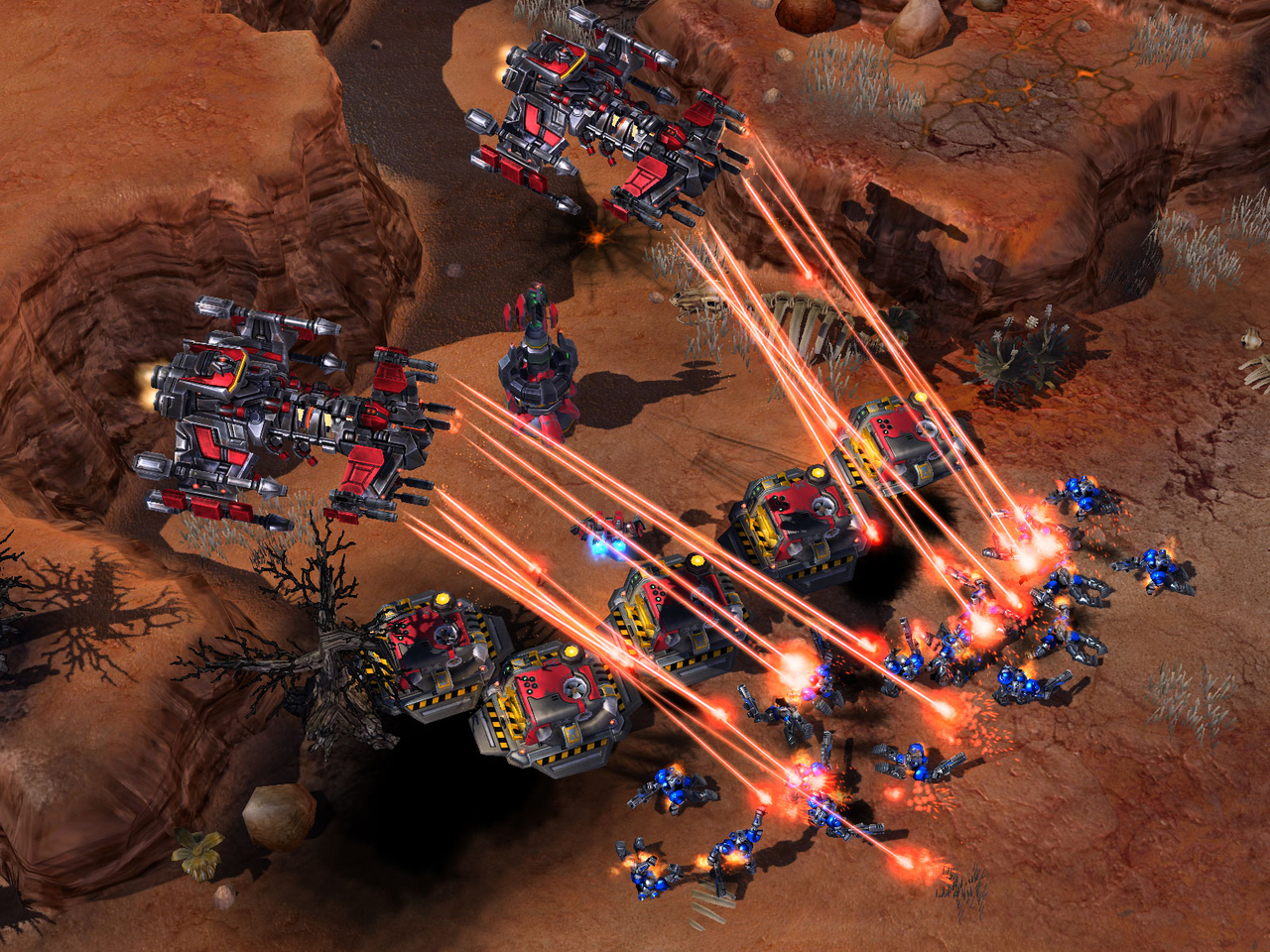
I'm not going to rule every player of Call of Duty out, but I'm confident that the majority of players of said game, and similar games, would likely never play a game like, say, Demon's Souls. Yet Demon's Souls is exactly what I would deem a hardcore title. A person who dedicates themselves to getting good at Demon's Souls is a lot more hardcore than someone who plays Black Ops online. Ditto, someone who plays StarCraft II competitively is more hardcore than someone spending time with Halo: Reach online. Because of the nature of games like Call of Duty, with its availability and with its easy access on the most basic level, that makes it the perfect game for a non-hardcore gamer. Obviously it takes time to get good at CoD, but anyone can jump right in and enjoy it, and that's entirely the point.

Some games require an immense amount of skill to become any good at them.

Of course, mass market dominance doesn't necessarily guarantee the game's players aren't hardcore, but to even get to that level typically depends on designing the game so that non-hardcore people can play and enjoy it; it's rare that a proper hardcore game hits the top of the charts, let alone remain there for more than a week. There's a reason why so many play Black Ops compared to Arma II on PC, it's not that Black Ops is supremely better -- it isn't -- it's that it's much easier to get into and enjoy, and allows instant gratification. Those are things non-hardcore gamers thrive on, while actual hardcore gamers are more inclined to wait and play longer before experiencing anything they deem enjoyable. And that's one of the main and vital differences between the two categories of gamers.

Now, I'm not saying I have any feelings towards any type of gamer, rather, I just want a gamer to realise exactly what type of gamer they are before judging others. At the moment, people playing Call of Duty every night on their 360s are looking at Wii players like they're killing gaming, yet all the while they're oblivious the notion that they themselves are likely contributing to the killing even more. What they should realise is that they're part of the middle-section of gamers, what I now deem pseudo-hardcore, since they believe they're hardcore, but are actually not. The sooner this realisation comes to pass, the better.